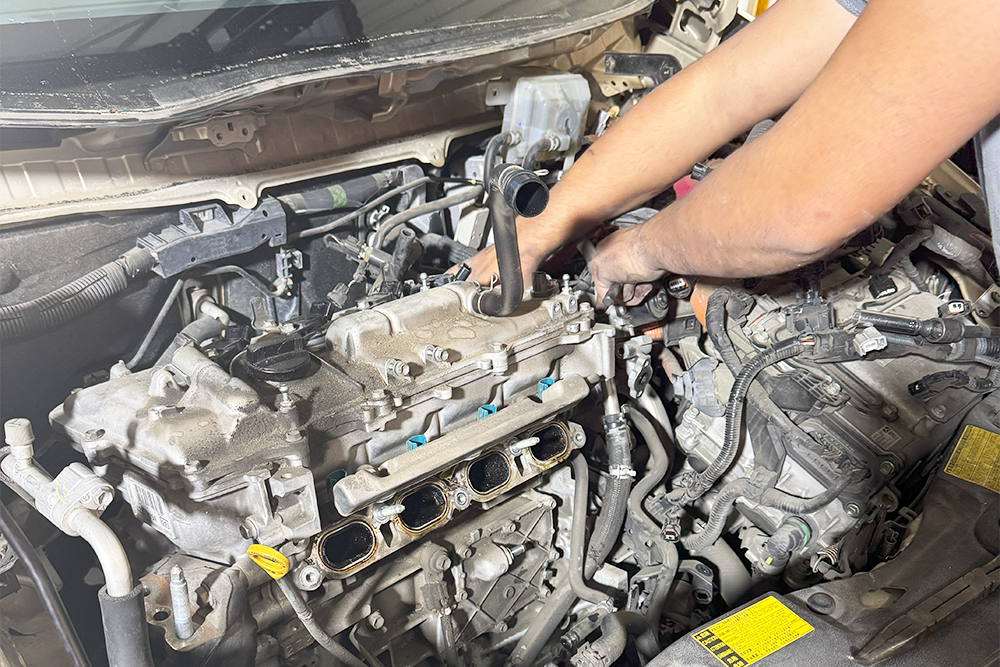
Common Reasons for Engine Replacement in a Prius
1. Oil Consumption Leading to Low Oil Damage (Gen 2 & Gen 3, mostly)
- Symptoms: Engine knocking, misfires, or total seizure, intermittent triangle light on some models
- Cause: Worn piston rings or valve seals lead to excessive oil burning.
- Effect: Owners don't check oil often, run low, spin bearings or seize engine.
- Gen 2 Alert: This is pretty common after 150,000 miles. Check oil regularly!
2. Blown Head Gasket — Especially Gen 3/Lexus CT200h
- Symptoms: Misfires on cold start, white smoke, coolant loss, oil in coolant.
- Cause: Overheating, defective head gasket material/design and electric water pump failure.
- Fix Options: Replace headgasket, but if overheating damaged long block = full replacement.
4. Hydrolock (Any Gen)
- Symptoms: Engine won't crank or makes a thud and stops.
- Cause: Water sucked into intake (deep puddles/floods) or rare leaking injectors or injectors stuck on full
- Result: Bent rods or valves. Engine seizure.
5. Rod Knock / Spun Bearings (Typically from oil starvation or blown head gasket)
- Symptoms: Loud ticking or knocking noise, worse with RPM.
- Cause: Oil starvation from burning, coolant and oil mix, neglect, or sludge.
- Fixable? Sometimes, but machine work and parts cost can exceed used engine swap.
6. Timing Chain / Valve Timing Failure
Rare but possible in higher mileage cars or poor maintenance. If the chain skips, valves can crash into pistons depending on year/model (interference engines).
Bonus: Hybrid-Specific Quirks
ICE runs less frequently, so issues can sneak up. The car may run fine in EV mode and only show engine problems intermittently. Owners neglect the engine because they think it "doesn't run much." Leads to lack of oil changes or low oil not being noticed.
Signs It's Time to Consider Replacement
- Low compression on multiple cylinders
- Rod knock with metal in oil
- Consuming > 1 qt oil every 500–1000 miles
- Misfire on cold starts with coolant loss (head gasket)
- White smoke and hard/no start
- Repeated overheating with no obvious fix
Prius Engine Diagnostic Checklist
This checklist assumes the vehicle arrives with drivability symptoms or warning lights.
Initial Visual & Fluid Inspection
- Check oil level and color
- Check coolant level and signs of oil mixing (milky dipstick and overflow tank)
- Look for coolant stains near head/block mating surfaces
Engine Behavior / Start-Up Symptoms
- Misfires on cold start
- White smoke from tailpipe
- Engine knocking or ticking
- Check engine light on?
Diagnostic Testing
- Read codes with hybrid-aware OBD2 scanner (look for P0300-P0304, P0117, P261B, etc.)
- Perform a compression test (dry and wet if needed)
- Optional: Leak-down test for pinpointing head gasket/valve issues
- Cooling system pressure test (look for internal or external leaks)
- Boroscope Cylinders while pressurized
Red Flags Suggesting Replacement
- Greater than 20 psi compression difference between cylinders
- Metal flakes or shavings in oil / milky oil or coolant
- Hydrolocked engine or crank won't turn by hand
- Misfire + coolant loss + white smoke
- Loud rod knock at idle or throttle
Recommendation Guidance for Customers
Recommend REPAIR if:
- Failure is isolated (e.g., early head gasket leak)
- No overheating or rod knock has occurred
- Compression is good
- Customer is on a tight budget
Recommend REPLACEMENT if:
- Engine overheated or seized
- Oil starvation occurred
- Multiple misfires with coolant or compression loss
- Rod knock or metal in oil present / oil and coolant mix
- Repair cost is near or above used engine replacement
Have a Toyota that's throwing this code?
Free mobile diagnostic, no upfront fee.